Introduction
Product Overview
Key Technical Specifications
Performance & Feature Analysis
Use‐Case Scenarios & Applications
Distributor & Market Positioning
Installation Considerations & Best Practices
Comparative Advantages & Potential Limitations
Case Study / Hypothetical Implementation
Future Outlook & Trends
Summary & Final Thoughts
Introduction
In the rapidly evolving field of video surveillance technology, modern IP cameras must satisfy a trifecta of demands: high resolution, robust environmental protection, and smart analytics/coding efficiency. The QNV‑7032R from Hanwha Vision is positioned to meet those challenges by combining 4 MP resolution, vandal‑resistant outdoor design, advanced compression and analytics features. This article explores in depth the QNV‑7032R: its technical specifications, performance strengths, installation and use scenarios, comparative advantages, potential limitations, and best‑practice recommendations.
Product Overview
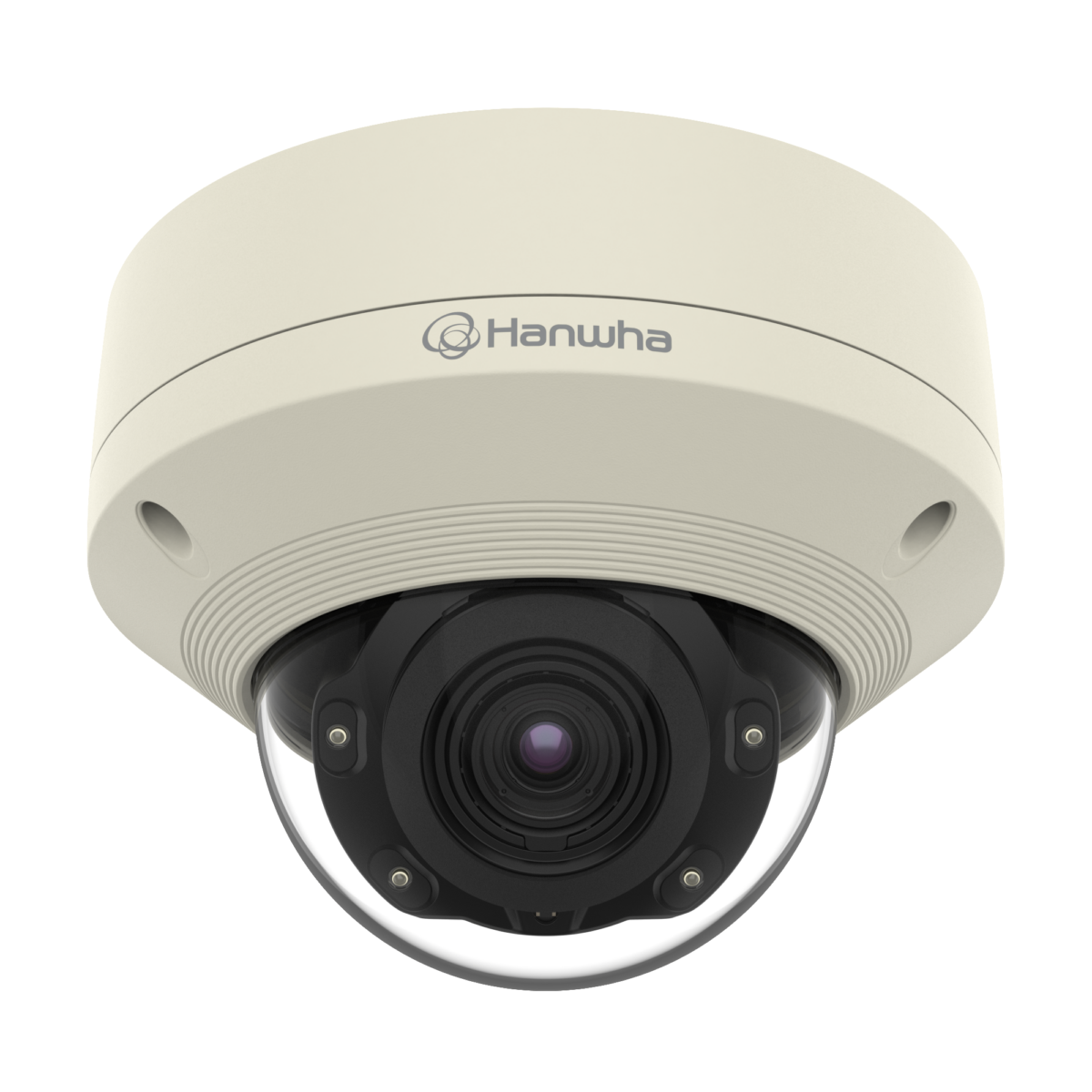
The QNV‑7032R is part of the “Q Series” line from Hanwha Vision. According to the manufacturer’s specification sheet:
-
It adopts a 1/3″ CMOS sensor and supports up to 4 MP resolution (2560 × 1440) at 30 fps via H.264/H.265. Network Webcams+2Hanwha Vision Europe Limited+2
-
It uses a 6 mm fixed focal lens, yielding a horizontal field of view of about 49° (vertical ~27.6°, diagonal ~55.6°) under F2.0. Hanwha Vision+1
-
It has IR illumination with an effective viewable range of up to 30 m. Network Webcams+1
-
It is designed for outdoor / vandal‑resistant use, with an IP66 ingress protection rating and IK10 impact resistance. Hanwha Vision+1
-
It supports dual power options: PoE (IEEE 802.3af Class 3) and 12 V DC. Network Webcams+1
-
Advanced features include WiseStream II codec support (for efficient bandwidth), lens distortion correction (LDC), “Hallway View” mode (rotated 90°/270°), and analytics like defocus detection, tampering detection, motion, directional detection, enter/exit, virtual lines. Hanwha Vision+1
In short, the QNV‑7032R is engineered for demanding outdoor surveillance applications where image clarity, environmental protection and analytical features matter.
Key Technical Specifications
Here is a breakdown of its major specifications:
| Specification Area | Details |
|---|---|
| Image / Sensor | 1/3″ CMOS sensor. Resolution up to 2560 × 1440 (4 MP). Hanwha Vision+1 |
| Lens | Fixed 6 mm focal length, maximum aperture F2.0. Field of view: H ~49°, V ~27.6°, D ~55.6°. B&H Photo Video |
| Illumination / IR | Colour minimum illumination: 0.15 Lux (F2.0, 1/30 s). B/W: 0 Lux when IR LED is on. IR viewable length ~30 m (≈98 ft). Network Webcams+1 |
| Video / Frame Rate | Up to 30 fps at 4 MP (H.264/H.265) in all resolutions. MJPEG up to 15 fps. Hanwha Vision+1 |
| Wide Dynamic Range (WDR) | 120 dB true WDR capability. a1securitycameras.com |
| Environmental Ratings | IP66 (dust/water protection) / IK10 (high impact resistance). Operational temperature: ‑40 °C to +55 °C. Network Webcams |
| Power Supply & Consumption | PoE (IEEE 802.3af Class 3), or 12 V DC. Power consumption max 10.7 W (PoE) / typical ~8.1 W. Network Webcams |
| Storage / Memory | Micro SD / SDHC / SDXC slot, supports up to 128 GB. On‑board memory: 512 MB RAM, 256 MB flash. Hanwha Vision |
| Networking & Protocols | 10/100 BASE‑T Ethernet (RJ‑45). Supports IPv4/IPv6, HTTP/HTTPS, SSL/TLS, ONVIF Profile S/G/T, SUNAPI, etc. Network Webcams |
With these specifications, the QNV‑7032R is clearly designed to offer reliable, high‑quality surveillance especially in exterior, potentially harsh environments.
Performance & Feature Analysis
3.1 Image Quality
With 4 MP resolution (2560×1440), the camera provides a significantly higher pixel count than standard 1080p (1920×1080) cameras. This allows for more detail in captured imagery — important for recognition and identification use‑cases. The 30 fps capability ensures smooth motion capture. The presence of 120 dB WDR helps in scenes with challenging lighting (for example, bright backgrounds and dark subjects) to preserve detail in both bright and shadowed areas.
3.2 Night‑Vision Capability
The built‑in IR LEDs with ~30 m range allow the camera to operate in complete darkness (0 Lux) in black/white mode. The 0.15 Lux minimum for colour ensures that even in low‑light daylight conditions you get usable colour imagery. For outdoor perimeter, parking‑lot, or entrance surveillance this is a valuable capability.
3.3 Environmental Robustness
The IP66 rating makes it dust‑tight and protected against powerful water jets; IK10 ensures vandal resistance (impact rating typically up to 20 J). The operating temperature range of –40 °C to +55 °C means it is suitable for very cold or very hot climates (including desert or arctic). In many real‑world outdoor deployments this kind of robustness is essential.
3.4 Coding / Bandwidth Efficiency
H.265 support and WiseStream II (Hanwha’s smart compression technology) help reduce bandwidth and storage cost by dynamically managing video quality in key areas of interest. The capability of microSD storing and onboard memory gives flexibility for edge storage / backup in case of network issues.
3.5 Smart Analytics & Integration
The camera includes analytics such as defocus detection (to detect when lens is out of focus/dirty), tampering detection (covering lens, repositioning), motion detection, enter/exit and directional detection, virtual line crossing, etc. These features reduce false alarms and increase usable footage. Integration with ONVIF and SUNAPI ensures compatibility with a wide range of VMS/NVR platforms, which enhances system flexibility.
3.6 Installation & Mounting Flexibility
With its vandal‑dome form factor, the camera is suitable for ceiling or wall mounting (in many cases with the appropriate accessories). Supports “hallway view” (rotated 90°/270°) which is useful in narrow passageways, corridors, etc. The wide temperature range, power flexibility (PoE or DC), and robust build contribute to ease of installation in varied contexts.
Use‐Case Scenarios & Applications
Given its specification set, the QNV‑7032R is well matched to the following types of applications:
-
Outdoor perimeter surveillance: Parking lots, building exteriors, border fences, entrance gates. The IR capability + vandal/impact resistance + robust weatherproofing make it reliable in such environments.
-
Urban / public spaces: Street‑corners, bus stops, city squares, tunnels or underpasses where vandalism, weather exposure and lighting variability are factors.
-
Retail exterior / facility entrances: Monitoring entrances to shopping centres, warehouses, industrial buildings where you need higher resolution for face/license‑plate‑capture.
-
Transport hubs: Train stations, metro entrances, airport exteriors. The robust build and analytics support help.
-
Critical infrastructure: Utility sites, substations, telecom towers. Environments where camera must withstand harsh climate and tampering risk.
Overall, the product is tailored for demanding exterior surveillance rather than simple indoor use.
Distributor & Market Positioning
When discussing a product like the QNV‑7032R, it’s relevant to mention its distribution ecosystem. Hanwha Vision works with authorized distributors and channel partners globally. For example, listings on distributor portals such as ADI Global show the QNV‑7032R as part of their catalogue (model code SQ‑QNV7032R) for professional installers. adiglobaldistribution.us
When selecting a distributor, look for:
-
Authorized reseller status (to guarantee warranty and genuine parts)
-
Local stock availability and support (for timely delivery, returns)
-
Technical support, installation guidance and training (for best performance)
-
Access to accessories (mounts, back boxes) compatible with the camera (Hanwha provides many such accessories) Hanwha Vision
In terms of market positioning, the QNV‑7032R appears as a “mid‑to‑premium” outdoor dome IP camera: higher specification than basic models, focusing on robust build, analytics and advanced coding. Compared to basic 2 MP outdoor domes, the 4 MP resolution and higher WDR/analytics are a step up.

Installation Considerations & Best Practices
To fully realize the benefits of a product like the QNV‑7032R, proper installation and configuration are key. Here are several best‑practice guidelines:
6.1 Mounting & Environment
-
Ensure the mounting bracket and conduit/back‑box is compatible with the camera diameter (Ø120.3 × 91.7 mm) and weight (~510 g) as specified. Network Webcams
-
Choose a location with a clear field of view, minimal obstruction, and avoid pointing directly into bright sources (sunset, headlights) to maximize the WDR benefit.
-
In exposed outdoor locations, ensure proper sealing of cable entries, and use protective covers if needed (even though IP66, prevent water tracking).
-
Consider the IR range (≈30 m) and field of view (≈49° horizontal) when planning coverage: for longer distances you may need additional cameras or a different model.
6.2 Power & Networking
-
Use PoE (IEEE 802.3af) if possible—it simplifies cabling. Ensure the switch or injector supports Class 3 and rated for outdoor environment if required.
-
If using 12 V DC, ensure a stable supply and appropriate backup/UPS (for critical systems).
-
Use appropriate CAT5e/6 cable rated for outdoor/UV‑resistant if exposed.
-
Enable network segmentation, secure passwords, consider VLANs and 802.1X if available to minimize security risk.
6.3 Configuration & Optimization
-
Update firmware to the latest version—manufacturers often release security patches and performance improvements.
-
Configure the correct resolution and frame rate: while 4 MP@30 fps gives highest detail, you may choose lower resolution or frame rate if bandwidth/storage is constrained.
-
Enable WiseStream II and H.265 coding to reduce bandwidth and storage consumption without significant loss in image quality.
-
Configure analytics (defocus detection, tampering, virtual lines) with care—set up zones where meaningful events occur (entrances, exits) to reduce false alarms.
-
Use the hallway view mode when appropriate (for vertical corridors) to maximize effective pixels on target.
-
Adjust IR and day/night switching thresholds to suit installation environment (e.g., in heavy ambient light areas, avoid IR bleed).
-
Set up proper archival strategy (edge‑storage micro SD + central NVR) and ensure you have adequate backup of critical footage.
6.4 Maintenance & Monitoring
-
Periodically inspect the dome surface for dirt, scratches or water ingress; clean with appropriate non‑abrasive cloth.
-
Review logs for tamper or defocus alerts; these can indicate physical damage or lens issues.
-
Ensure firmware is patched and access control policies are maintained (secure login, disable default accounts).
-
Monitor storage usage, network load and video quality periodically to ensure system remains optimal.
Comparative Advantages & Potential Limitations
Advantages
-
High resolution: 4 MP gives more image detail compared to many 2 MP systems.
-
Robust build: IP66 + IK10 + wide temperature make it suitable for harsh outdoor use.
-
Efficient coding and analytics: H.265 + WiseStream II + smart analytics reduce operational cost (storage/bandwidth) and increase value.
-
Feature‑rich: Fixed 6 mm lens with decent field of view, IR illumination, hallway view, microSD, dual power.
-
Integration friendly: ONVIF, SUNAPI support ensures compatibility with many VMS/NVRs.
Potential Limitations / Considerations
-
Fixed lens only (6 mm): While adequate for many outdoor uses, if you need variable zoom or wider field of view you may need a different lens/varifocal model.
-
4 MP at 30 fps requires sufficient network and storage capacity; in constrained systems you may need to tune resolution/frame rate.
-
While IP66/IK10 are high ratings, always consider the full site conditions (e.g., chemical exposure, very high altitudes) which may challenge even rugged cameras.
-
MicroSD slot supports up to 128 GB only: while this is useful for edge backup, for long‑term local recording you’ll likely rely on network storage/NVR.
-
As technology advances rapidly, newer models may support higher resolution (e.g., 6–8 MP), AI analytics or upgraded features; depending on budget, you may want to check the most current models.
Case Study / Hypothetical Implementation
Consider a mid‑sized retail complex with an open outdoor plaza, several entrance gates, and a parking lot that extends to about 40 m from the building. The security team wants to monitor license plates at the entrance, track pedestrian movement, and deter vandalism in the plaza area after hours.
Using the QNV‑7032R, the integrator may proceed as follows:
-
Mount one camera at each entrance gate, aimed to cover up to ~30 m with good detail, benefiting from the 4 MP resolution and IR range.
-
Mount additional cameras on building corners facing the plaza; the 49° field of view captures a wide area yet preserves detail.
-
Use PoE switches located in an outdoor‑rated telecom cabinet, ensuring stable power and network to cameras.
-
Configure analytics: virtual line crossings on pedestrian walkway, tamper detection on cameras and defocus alerts for when the dome gets dirty or blocked.
-
Employ microSD cards in each camera as a buffer to capture footage in case of NVR/network outage, combined with central NVR for archiving.
-
Set up periodic maintenance: remote health check of each camera, log review for tamper/defocus events, dome cleaning schedule quarterly.
-
Test after installation under low light (night) and high contrast conditions (sunset) to ensure the WDR/IR functions as expected.
Result: The retail complex obtains clear, high‑definition imagery of key areas, robust outdoor performance even in harsh weather, and smart alerts to focus security team attention where it matters.
Future Outlook & Trends
The surveillance camera market continues evolving rapidly. Some trends relevant to products like the QNV‑7032R include:
-
AI & Deep‑Learning Analytics: While the QNV‑7032R includes basic analytics (motion, direction, tampering), future models are increasingly embedding AI capabilities (face recognition, behavioral analytics, anomaly detection). For high‑security applications, one might consider upgrading to such models.
-
Higher Resolutions: 4 MP has been a strong standard. However, 6 MP, 8 MP (4K) and even higher are becoming common. For installations where very fine detail (license plates at distance, facial recognition) is essential, you may evaluate higher‑resolution offerings.
-
Edge Processing & Smart Compression: Technologies like WiseStream II already help. Future generations will integrate more intelligence and compression improvements to reduce network/storage load.
-
Cybersecurity & Network Protection: As cameras become networked IoT devices, the importance of firmware updates, secure authentication, encryption and auditing increases. The QNV‑7032R supports modern protocols, but users must maintain best practices.
-
Edge Storage & Redundancy: While microSD support is useful, more systems are integrating hybrid storage architectures (edge + cloud + central) to provide resilience and scalability.
-
Simplified Deployment & Smart Mounts: Quick‑install mounts, pre‑calibrated analytics zones, and self‑diagnosis features reduce installer time and cost. The robust build of the QNV‑7032R positions it well now, but future iterations might include more plug‑and‑play features.
For an organization selecting cameras today, the QNV‑7032R offers a strong value‑proposition, and if future‑proofing is important, one should evaluate the upgrade path within the Hanwha Vision ecosystem or compare with competing brands’ higher‑end models.
Summary & Final Thoughts
The Hanwha Vision QNV‑7032R is a thoughtfully designed outdoor, vandal‑resistant dome IP camera, offering 4 MP resolution, IR night vision, robust environmental ratings (IP66/IK10), efficient compression and smart analytics. It is well suited to demanding surveillance scenarios such as outdoor perimeters, parking lots, transportation hubs and other installations where durability and image quality matter equally.
However, as with any technology choice, match the camera specification to your actual use‑case: if you need zoom lenses, ultra‑long‑distance license‑plate capture, or embedded AI analytics, you may wish to consider higher‑end models or add‑on analytics platforms. Additionally, the performance of the system hinges not only on the camera hardware, but also on installation quality, network & storage infrastructure, and ongoing maintenance/monitoring.
In commercial practice, the QNV‑7032R stands as a smart, capable choice for many standard to moderately challenging outdoor surveillance installations. If you’re exploring a surveillance upgrade or looking to deploy a new system in an environment with exposure to weather and potential vandalism, this camera merits strong consideration.